4 min read

AI Chip Racks Are Too Heavy for Data Center Floors

AI Chip Racks Are Too Heavy for Data Center Floors
8:35

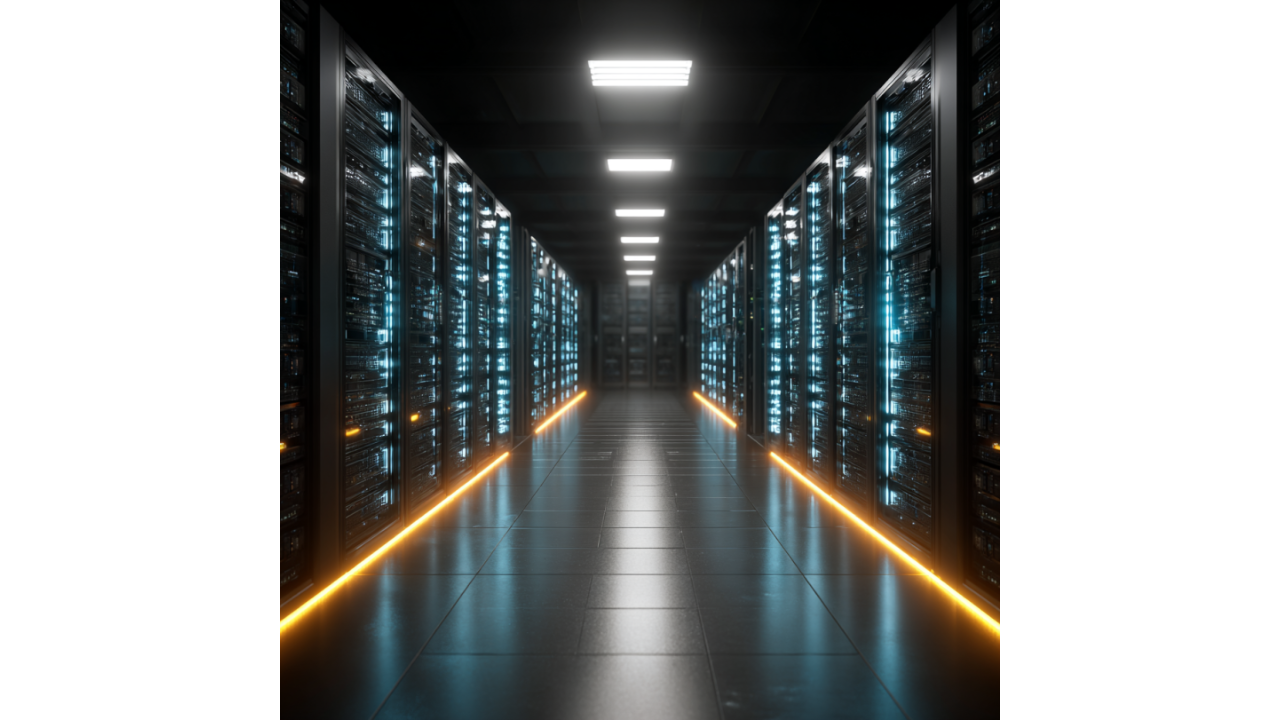
The AI boom has a gloriously mundane bottleneck: the floors can't hold the weight. According to The Verge's reporting, data centers built before the current AI frenzy simply cannot support the mass of modern GPU racks without cracking the concrete beneath them.

Chris Brown, CTO at Uptime Institute, summarized the infrastructure crisis with admirable directness: "We can retrofit the old ones to an extent, but not to the extent that a lot of these AI factories need." Translation: most retrofits mean "bulldozing the building and starting over from scratch."

This is why US data center count quadrupled from 2010 to 2024, and why 377 construction projects over 100 megawatts have been announced in the last four years. Not because the AI industry is visionary, but because their hardware is literally too heavy for existing buildings.

The Physics Problem Nobody Saw Coming

The weight differential between traditional server racks and AI computing infrastructure is substantial enough to exceed structural load limits designed decades ago. Legacy data centers were engineered for standard server density—the computational workhorses of cloud storage, web hosting, and enterprise applications that dominated the 2000s and 2010s.

GPU clusters for AI training require dramatically different power delivery, cooling systems, and crucially, weight distribution. Nvidia's H100 systems, the dominant AI training chips, pack substantially more mass per rack than traditional CPUs. When you're stacking these units in rows across data center floors, the cumulative weight exceeds what many existing structures were rated to support.

The alternative to building new facilities—reinforcing existing floors, upgrading power infrastructure, installing advanced cooling—approaches the cost of new construction while delivering inferior results. You can't easily retrofit structural load capacity without essentially rebuilding from foundation upward.

Research from Lawrence Berkeley National Laboratory found that AI workloads consume 10-50x more power per server rack than traditional computing, which translates directly to heavier power delivery equipment, more robust cooling infrastructure, and denser hardware configurations. That power density creates weight density that legacy buildings cannot accommodate.

New call-to-action

Why This Matters Beyond Construction Costs

The inability to retrofit existing data centers means AI infrastructure buildout requires exponentially more resources—land acquisition, environmental permitting, utility grid upgrades, and construction labor—than if companies could simply upgrade current facilities.

This has cascading economic and environmental implications. New data center construction requires massive cement production, a significant contributor to global carbon emissions. The buildout demands electrical grid expansion in regions already facing capacity constraints. And it concentrates enormous capital investment in greenfield projects rather than maximizing existing infrastructure.

From a strategic perspective, companies that secured data center capacity early—hyperscalers like Microsoft, Google, and Amazon with established infrastructure footprints—gained structural advantages that new AI entrants cannot easily replicate. You can't retrofit your way into competitive AI compute if the buildings themselves can't support the hardware.

The environmental angle deserves particular attention. The Verge's article notes that environmentalists "would not like us to allow" Big Tech's compute race to continue unchecked. When physical infrastructure limitations force new construction rather than retrofits, the carbon footprint of AI development increases substantially beyond just operational energy consumption.

The Real Estate and Utility Bottleneck

Uptime Institute's data showing 377 projects over 100 megawatts represents extraordinary infrastructure concentration. For context, 100 megawatts powers roughly 80,000 homes continuously. These aren't incremental upgrades—they're industrial-scale electrical loads requiring dedicated utility infrastructure.

Utility companies now face AI data center requests that exceed total residential demand for entire counties. This creates grid planning challenges where AI infrastructure competes directly with other economic development and residential growth. Some regions have begun rejecting or delaying data center permits because local grids cannot accommodate the load without massive transmission upgrades requiring years of construction.

The real estate implications are equally significant. AI data centers require locations with available land, utility capacity, cooling water access, and favorable regulatory environments. This has driven development to specific regions—often rural areas with cheap power and available land—creating geographic concentration that introduces systemic risk.

If a small number of regions host most AI training infrastructure, natural disasters, grid failures, or regulatory changes in those locations could disrupt the entire industry. The inability to retrofit existing urban data centers means AI compute increasingly concentrates in locations optimized for infrastructure rather than proximity to talent, customers, or related industries.

What This Means for AI Economics and Strategy

The weight bottleneck fundamentally changes AI infrastructure economics. Companies that assumed they could gradually scale compute by upgrading existing facilities discovered they need to commit billions to new construction with multi-year development timelines. This creates enormous barriers to entry and reinforces advantages for incumbents with capital to deploy at scale.

For startups and mid-size companies attempting to compete in AI development, the infrastructure barrier is increasingly prohibitive. You can't train frontier models without access to massive compute clusters, and you can't access those clusters without either securing cloud capacity from hyperscalers or building dedicated facilities—both options requiring capital commitments that exceed most companies' entire valuations.

This has strategic implications for which companies can meaningfully compete in AI development. The industry increasingly bifurcates between organizations with sufficient capital for dedicated infrastructure and everyone else dependent on cloud providers' capacity allocation decisions. That dependence creates leverage imbalances that shape which research directions get pursued and which products reach market.

Our Take: Infrastructure Physics Reshaping AI Competition

We're struck by how thoroughly a mundane constraint—floor load capacity—has reshaped AI industry dynamics. This isn't a software problem or an algorithmic breakthrough needed. It's civil engineering blocking what was supposed to be a seamless transition to AI-centric computing.

The inability to retrofit existing infrastructure means the AI boom requires far more capital, time, and environmental resources than industry projections initially suggested. Companies that understood this constraint early and committed to new construction secured advantages that competitors cannot easily replicate through technical innovation alone.

For marketing and growth leaders evaluating AI vendor relationships, the infrastructure bottleneck creates supply-side constraints that will persist for years. Cloud AI capacity will remain constrained not because providers lack demand or technical capability, but because their hardware literally cannot fit in their existing buildings. That constraint shapes pricing, availability, and competitive positioning across the entire AI value chain.

The industry built on the promise of infinite scalability just discovered it's limited by how much weight a concrete slab can support. That's either comedy or tragedy depending on whether you've already committed capital to infrastructure that can actually hold your GPUs.

If your team needs strategic guidance on navigating AI infrastructure constraints and vendor capacity limitations that will shape market dynamics for the next five years, Winsome Marketing's growth experts can help you build resilient technology strategies. Let's talk.

AI Experts Return From China Stunned by America's Weak Power Grid

AI Experts Return From China Stunned by America's Weak Power Grid

"Everywhere we went, people treated energy availability as a given." That's Rui Ma, founder of Tech Buzz China, describing her recent tour of Chinese...

Read More
Jensen Huang Says There's No Finish Line in the AI Race

Jensen Huang Says There's No Finish Line in the AI Race

Nvidia CEO Jensen Huang sat down with Joe Rogan and delivered a message that contradicts most breathless AI coverage: there won't be a winner in the...

Read More
CoreWeave's $14 Billion Meta Deal

CoreWeave's $14 Billion Meta Deal

CoreWeave's stock jumped 13% Tuesday morning after announcing a $14.2 billion AI cloud infrastructure deal with Meta. Days earlier, the company...

Read More