4 min read

MIT's "Speech-to-Reality" System Builds Furniture From Voice Commands

MIT's
MIT's "Speech-to-Reality" System Builds Furniture From Voice Commands
7:53

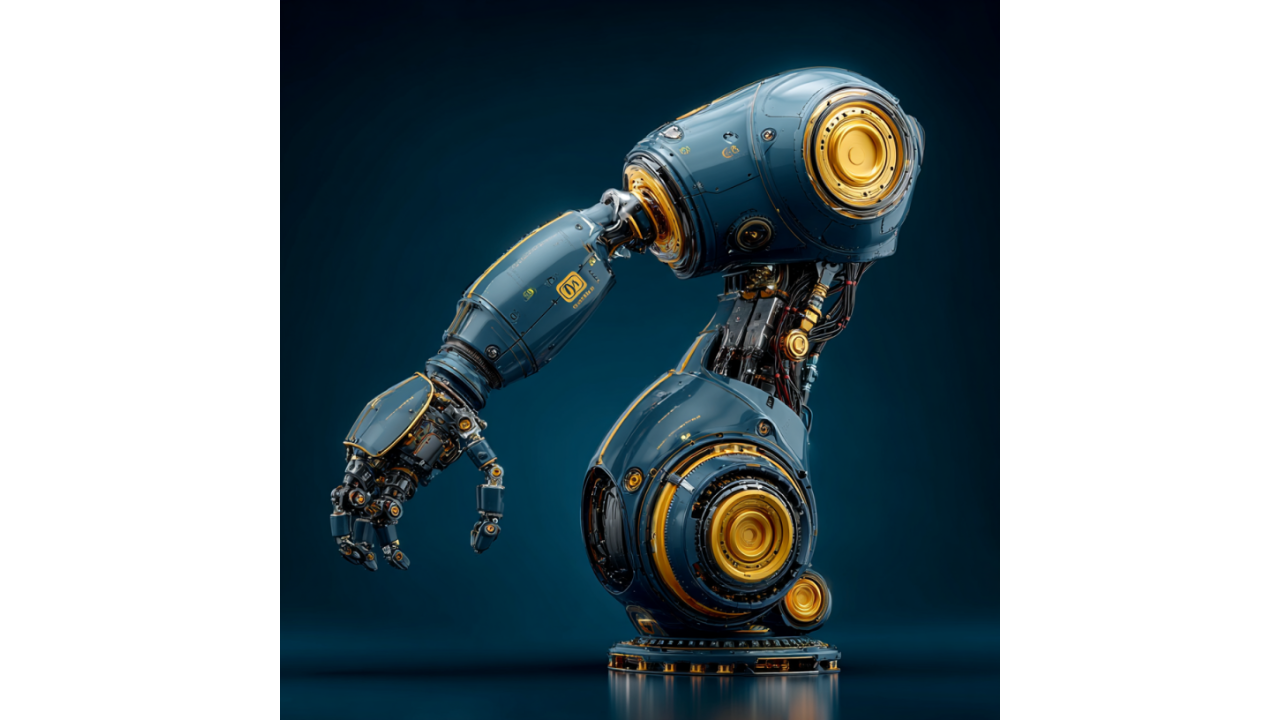
MIT researchers just demonstrated a system that builds physical objects from voice commands in as little as five minutes. Say "I want a simple stool" and a robotic arm assembles one from modular components. The team has created stools, shelves, chairs, tables, and decorative items like dog statues through spoken prompts alone.

"We're connecting natural language processing, 3D generative AI, and robotic assembly," explains Alexander Htet Kyaw, MIT graduate student and lead researcher. "These are rapidly advancing areas of research that haven't been brought together before in a way that you can actually make physical objects just from a simple speech prompt."

The system converts speech to digital mesh using generative AI, breaks the mesh into assembly components through voxelization, accounts for physical constraints like overhangs and connectivity, then plans robotic assembly sequences. Unlike 3D printing which takes hours or days, this builds within minutes by assembling pre-fabricated modular cubes.

Kyaw frames this as moving toward a future where "reality can be generated on demand"—explicitly referencing Star Trek replicators and "Big Hero 6" robots as inspiration.

What This Actually Demonstrates

The technical achievement is legitimate: integrating speech recognition, 3D generative AI, and robotic assembly into a functional pipeline represents solid systems engineering. Converting natural language to physical objects without requiring 3D modeling expertise or robotic programming knowledge genuinely lowers barriers to fabrication.

But the practical utility remains unclear. The system builds lattice-like structures from magnetic cubes—essentially sophisticated Lego furniture. The researchers acknowledge they need to "improve the weight-bearing capability of the furniture by changing the means of connecting the cubes from magnets to more robust connections." Translation: the furniture can't currently support meaningful weight.

This is proof-of-concept work, not production-ready manufacturing. The gap between "we built a decorative dog statue" and "we're revolutionizing on-demand manufacturing" is substantial. The Star Trek replicator comparisons do more harm than good—they set expectations the technology can't meet while obscuring what it actually accomplishes.

New call-to-action

The Modular Component Constraint

The system only works with pre-fabricated modular components. You can't speak arbitrary objects into existence—you can speak objects that can be assembled from available modules. This is a significant constraint that limits applications far more than the demos suggest.

Kyaw positions modular components as sustainability feature: "eliminate the waste that goes into making physical objects by disassembling and then reassembling them into something different, for instance turning a sofa into a bed when you no longer need the sofa."

But modularity for reconfigurability conflicts with optimization for specific functions. A sofa designed to become a bed won't be as good a sofa as one designed only to be a sofa. Furniture that's truly optimized for disassembly and reassembly tends to be mediocre at its primary function. This isn't a technology limitation—it's a fundamental design trade-off.

The sustainability argument also ignores manufacturing realities. Producing standardized modular components at scale, maintaining inventory, handling logistics, managing connections—this creates overhead that might exceed the waste savings from reconfigurability. You've just shifted waste from end-of-life disposal to production and distribution inefficiency.

What "Five Minutes" Actually Means

The system builds objects in "as little as five minutes"—faster than 3D printing's hours or days. But this comparison is misleading. 3D printing starts with raw material and produces custom geometry. This system assembles pre-fabricated components into lattice structures.

The actual time comparison should include component fabrication. How long does it take to manufacture the modular cubes? What's the lead time for maintaining adequate inventory? What's the total system cost including robotic arms, components, and supporting infrastructure?

Five-minute assembly is impressive if you ignore everything that happens before the robot starts moving. It's far less impressive when you account for the complete production chain required to make "speaking objects into existence" possible.

The Accessibility Claim

Kyaw emphasizes making "design and manufacturing more accessible to people without expertise in 3D modeling or robotic programming." This democratization narrative appears in every interface simplification project, and it's partially true—removing technical barriers does expand access.

But accessibility to what? You're making it easier to assemble lattice structures from magnetic cubes. That's not the same as making manufacturing accessible. It's making one very specific fabrication process accessible, with significant constraints on what can be produced and how well it performs.

True manufacturing accessibility would mean enabling people to produce objects competitive with mass-manufactured alternatives in quality, durability, and cost. This system doesn't approach that threshold. It enables rapid prototyping of conceptual forms, which is valuable for design exploration but shouldn't be confused with democratizing manufacturing.

Where This Might Actually Matter

The research has legitimate applications in specific contexts. Rapid prototyping for designers exploring form variations. Educational environments teaching principles of modular design and robotic assembly. Temporary structures where reconfigurability outweighs functional optimization. Scenarios where speed of iteration matters more than end-product quality.

The team mentions developing "pipelines for converting voxel structures into feasible assembly sequences for small, distributed mobile robots, which could help translate this work to structures at any size scale." If they can scale this to architectural applications—rapidly reconfigurable spaces, emergency shelters, temporary infrastructure—the value proposition changes significantly.

But furniture from magnetic cubes isn't the killer app. It's a demonstration platform for integration techniques that might eventually enable more substantial applications.

The Star Trek Problem

Kyaw's explicit invocation of Star Trek replicators and "Big Hero 6" robots reveals the framing problem. These references set expectations for matter manipulation and instant fabrication that current technology can't remotely approach. They generate hype that obscures actual capabilities and limitations.

"I'm working toward a future where the very essence of matter is truly in your control. One where reality can be generated on demand," Kyaw explains. This is science fiction rhetoric applied to systems engineering research. It does the work a disservice by suggesting capabilities that don't exist while undervaluing capabilities that do.

For teams evaluating manufacturing automation, the lesson is separating demonstration capability from production readiness. Systems that work in controlled labs with pre-fabricated components face enormous challenges scaling to real-world manufacturing constraints. At Winsome Marketing, we help companies evaluate emerging technologies based on what they demonstrably do today—not what researchers hope they might eventually enable. Speaking objects into existence makes great video. Building objects that actually serve human needs requires engineering beyond the demo.

Runway's Aleph Upends Traditional Video Editing

Runway's Aleph Upends Traditional Video Editing

We just witnessed the Gutenberg moment for video editing, and most people are still arguing about whether the printing press will catch on. Runway's...

Read More
Elon's Anime Companion, 'Ani' - Oh, Great

Elon's Anime Companion, 'Ani' - Oh, Great

Well, well, well. Just when you thought 2025 couldn't get any more dystopian, our resident tech overlord Elon Musk has gifted us with something that...

Read More
AI Detects ADHD Through Visual Rhythms

AI Detects ADHD Through Visual Rhythms

A research team at the University of Montreal just published something remarkable: they can identify adults with ADHD with over 90% accuracy using a...

Read More