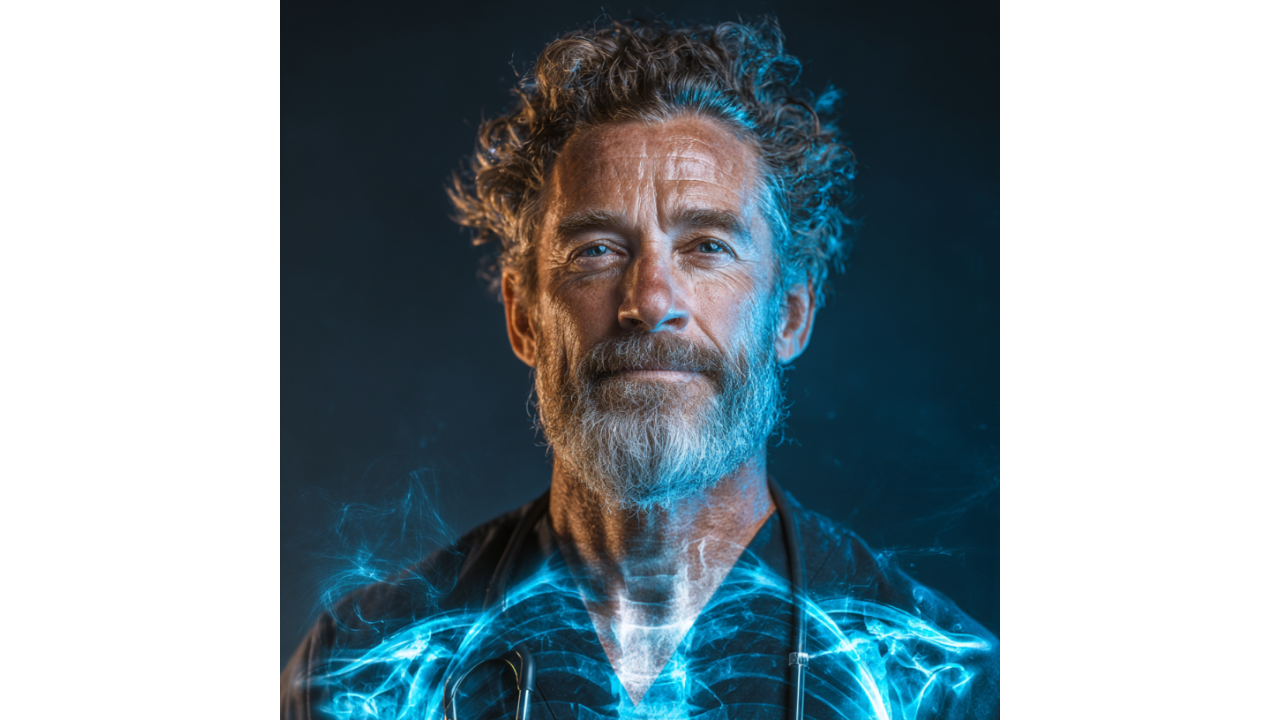
Radiology's AI Problem: When Technology Moves Faster Than Medicine Can Validate It
At this week's Radiological Society of North America conference in Chicago, over 100 companies filled an AI showcase larger than two football fields....
2 min read
Writing Team
:
Feb 25, 2026 8:00:00 AM
The world's largest consulting firm just surveyed 4,454 CEOs across 95 countries. More than half are getting zero return from their AI investments. The diagnosis isn't what Silicon Valley wants to hear.
PwC's 29th Global CEO Survey, released at Davos in January, contains a number that should stop every executive in their tracks: more than half of CEOs say their companies have seen neither higher revenues nor lower costs from AI, while only one in eight report both positive impacts.
Not "modest returns." Not "early but promising." Nothing.
This echoes an MIT study from August 2025, finding that 95% of generative AI pilots were failing across the corporate sector. At some point, the pattern stops being about the technology.
PwC's global chairman, Mohamed Kande, didn't mince words at Davos: "Somehow AI moves so fast that people forgot that the adoption of technology, you have to go to the basics." Clean data. Solid business processes. Governance. The unglamorous infrastructure that makes technology actually work in an organization.
It's a remarkable thing to say from the top of the world's largest professional services firm — that the answer to the most-hyped technology in a generation is, essentially, management fundamentals. But the data backs him up. CEOs reporting both cost and revenue gains are two to three times more likely to say they have embedded AI extensively across products and services, demand generation, and strategic decision-making, and three times more likely to have established responsible AI frameworks and technology environments that enable enterprise-wide integration. PwC
The companies winning aren't using better AI. They're deploying it differently — at depth, across the business, tied to real revenue outcomes, not isolated proof-of-concept projects that never escape the pilot phase.
There's a term worth naming here: pilot purgatory. The Vanguard companies — the 12% seeing real returns — are almost three times more likely to be using AI directly in what they sell, in their products, services, and customer experiences. Among the remaining 88%, only 17% do this.
Most organizations deploy AI in operations, such as writing internal emails, summarizing meetings, and generating social content. The Vanguard companies deploy it in value creation, in what customers actually experience and pay for. That distinction isn't semantic. It's the entire difference between a productivity experiment and a competitive advantage.
Meanwhile, a separate PwC analysis shows that companies that widely apply AI to products, services, and customer experiences achieved nearly 4 percentage points higher profit margins than those that did not. PwC
Four points of margin, at enterprise scale, is not a rounding error.
Only 30% of CEOs are confident about revenue growth over the next 12 months — down from 38% in 2025 and 56% in 2022, marking a five-year low. PwC
This is happening simultaneously with record AI investment, record infrastructure spending, and record hype. The gap between ambition and outcome is now wide enough to show up in business confidence metrics globally.
Kande frames it as a "trimodal" mandate: executives must run their current business, transform it in real time, and build entirely new business models simultaneously. That's an enormous cognitive and organizational load — and it explains why so many companies are losing the thread. They're throwing AI at the problem without first answering the harder question: what, specifically, are we trying to change, and how will we know when it's working?
For marketers and CGOs, the PwC data is both a warning and a competitive opening. If 56% of organizations are getting nothing, that means companies with a real AI strategy — one tied to revenue outcomes, not just tool adoption — are operating in an increasingly sparse field.
The companies that will define the next five years aren't the ones with the most AI subscriptions. They're the ones that built their growth infrastructure around what AI can actually do when deployed with intention: personalized customer experiences at scale, faster decision cycles, smarter demand generation. The basics, done well, with AI in the right places.
That's not a technology story. It's a leadership story.
Winsome Marketing helps growth leaders build AI strategies that translate investment into measurable results — not pilot projects. Let's talk.
At this week's Radiological Society of North America conference in Chicago, over 100 companies filled an AI showcase larger than two football fields....
Terence Tao—one of the world's most decorated mathematicians and a Fields Medal recipient—just offered the most precise diagnosis of AI's...
You're a respected computer scientist at Waseda University, staring at your latest manuscript. You know the dirty secret everyone whispers about in...