CONTENT STRATEGY WORKSHEET: 2025 EDITION
Download a configured spreadsheet that provides:
- A full worksheet for content strategy, including YoY metrics comparisons
- A planning tool for organic, inbound, and outbound content
- A coordinated way to compile competitive research, KW research, and general SEO research
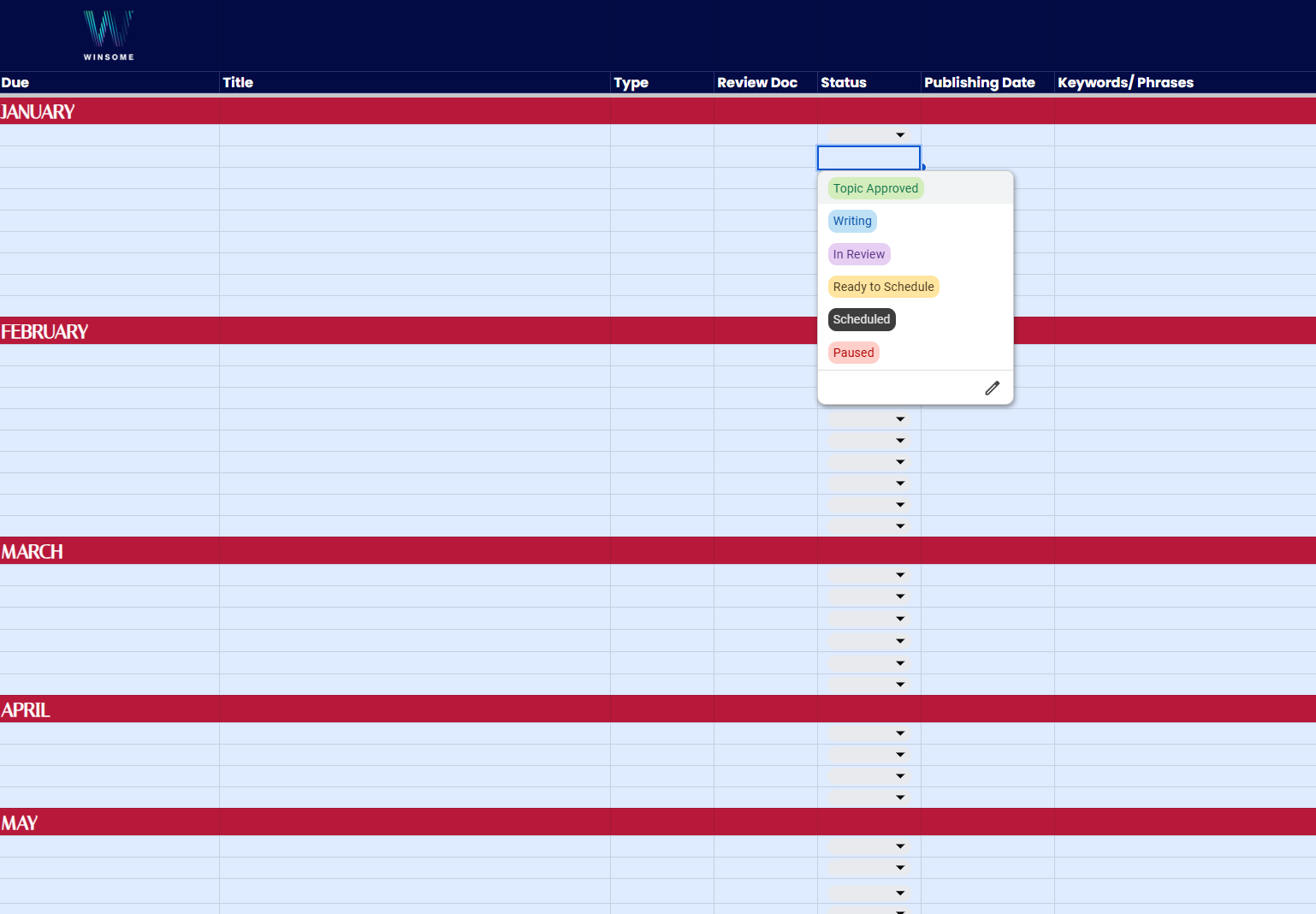
- A pre-built editorial sheet with configured content stage dropdowns
DOWNLOAD NOW
Map the Year in Content
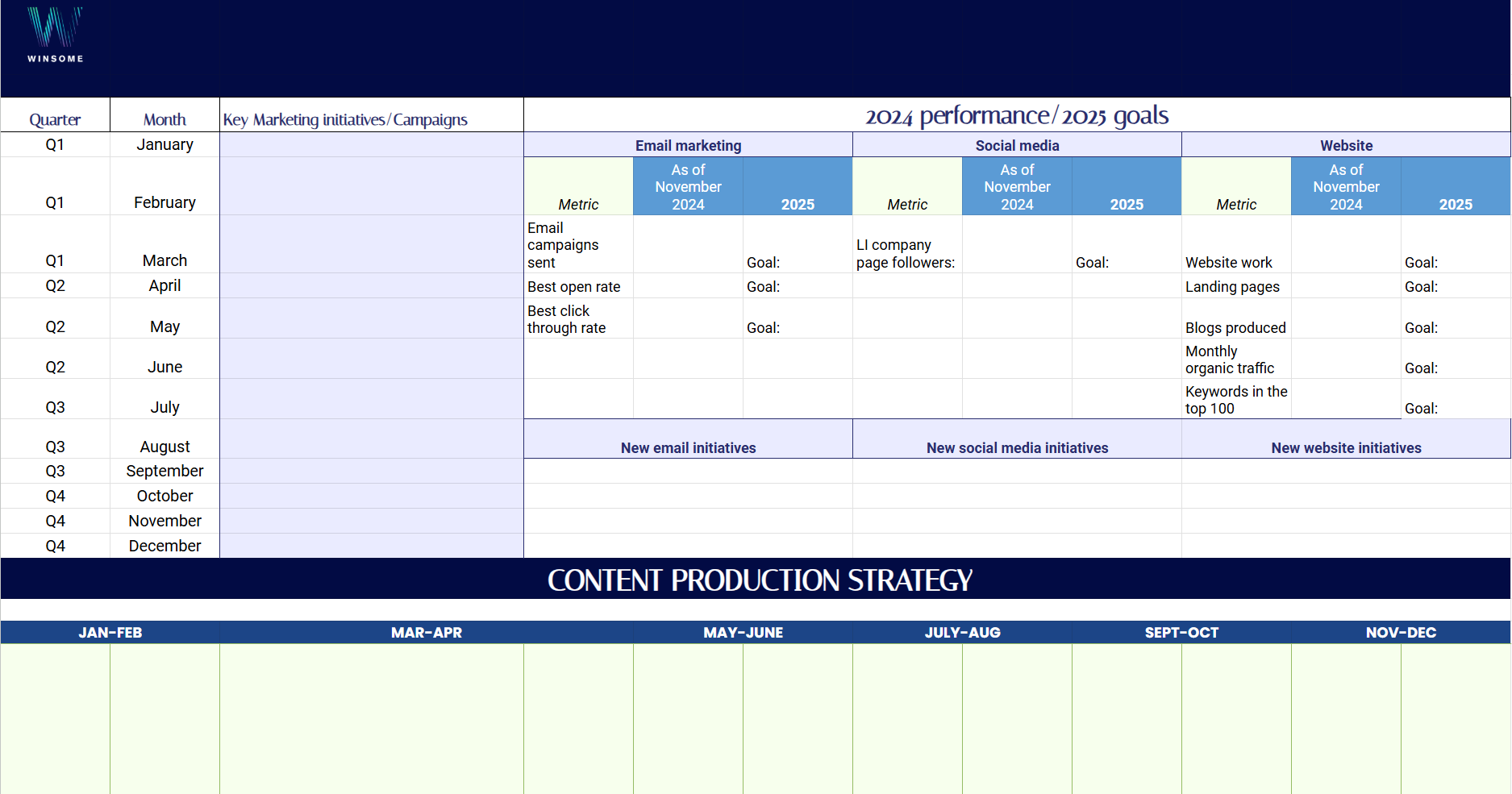
This section of the content strategy template is your roadmap for annual planning, breaking the year into quarters and months to align your campaigns and goals.
Use it to map out key initiatives like email marketing, social media pushes, and website updates, while tracking progress against metrics from 2024 and setting ambitious but achievable goals for 2025.
Each month has a focus—whether it's boosting open rates, creating new blogs, or launching fresh campaigns—so you can stay organized and adapt as needed.
It’s all about keeping your team on the same page and making sure every effort ties back to your big-picture strategy.
Don't Fake it: Just Make it
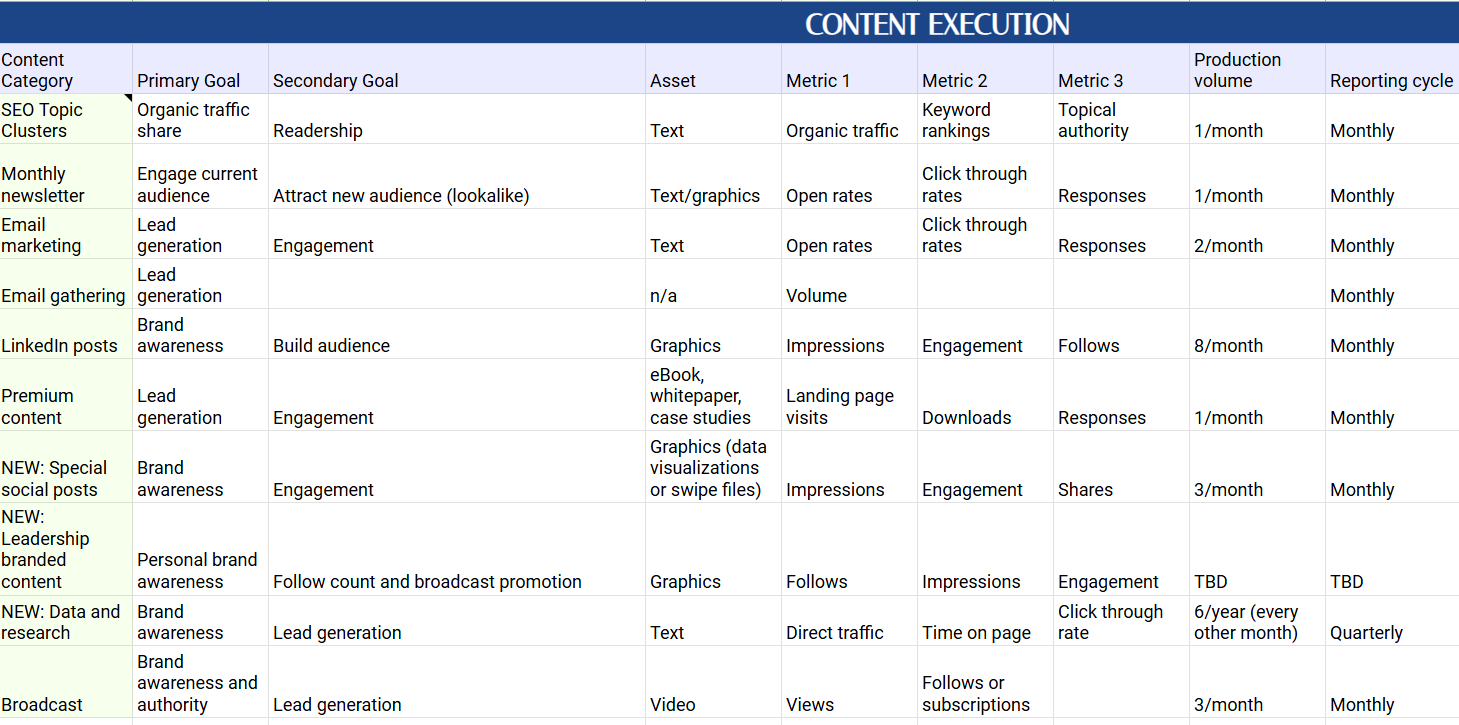
This section focuses on your Content Production Strategy—essentially your playbook for creating and delivering impactful content that aligns with your business goals. It breaks down content categories, defining their primary and secondary objectives, the types of assets to produce (e.g., newsletters, LinkedIn posts, or videos), and the metrics to track success.
Each category also outlines production volume and reporting cycles to keep everything on schedule.
For example, monthly newsletters aim to engage current audiences with measurable goals like open rates and click-throughs, while new initiatives like leadership-branded content and social posts drive personal branding and engagement.
This section helps you prioritize, plan, and measure, ensuring your efforts are both creative and results-driven.
Build the Funnel and They Will Come
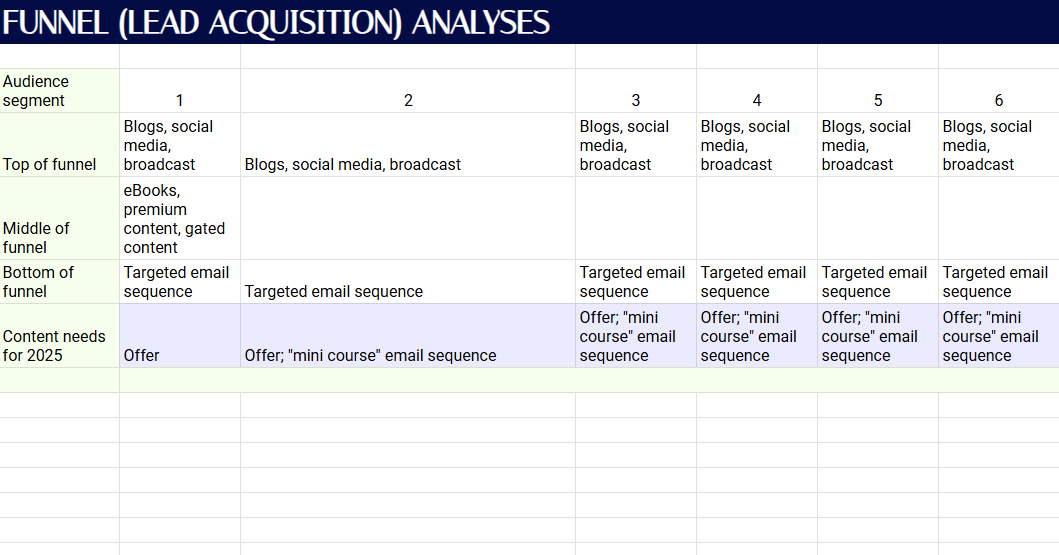
This section outlines the Funnel (Lead Acquisition) Analysis, a strategic framework to guide content creation and engagement across different audience segments.
It divides the customer journey into three stages—top, middle, and bottom of the funnel—identifying the content types that resonate at each level. At the top, broad-reaching content like blogs, social media, and broadcasts attract awareness across all segments.
The middle focuses on lead capture with premium or gated content like eBooks, while the bottom uses targeted email sequences to nurture and convert leads.
For 2025, there's a focus on enriching offers with "mini course" email sequences, ensuring tailored engagement throughout the funnel.
This section helps ensure every piece of content serves a purpose in moving your audience closer to conversion.
Know Your Strengths and Weaknesses
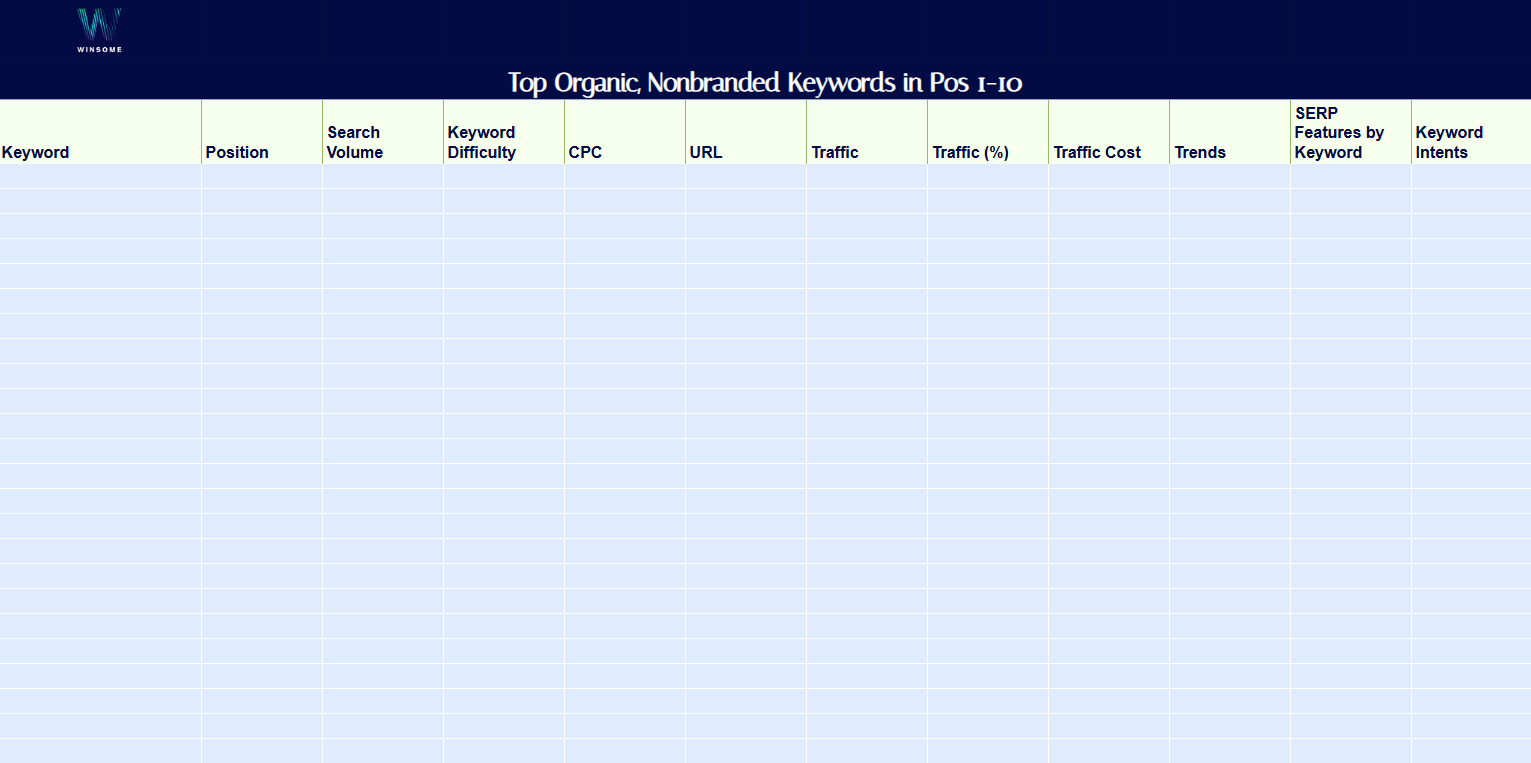
This section highlights your Top Organic, Nonbranded Keywords in Positions 1-10, providing insights into high-performing search terms that drive traffic to your site.
For each keyword, it tracks key metrics like search volume, keyword difficulty, cost-per-click (CPC), and traffic contribution, along with associated URLs and trends. It also identifies SERP features (e.g., featured snippets, video results), keyword intents, and core findings for actionable insights.
This data is essential for understanding what’s working in your SEO strategy, optimizing content for high-impact keywords, and capitalizing on trends to maintain or improve top-ranking positions.
Map the Territory
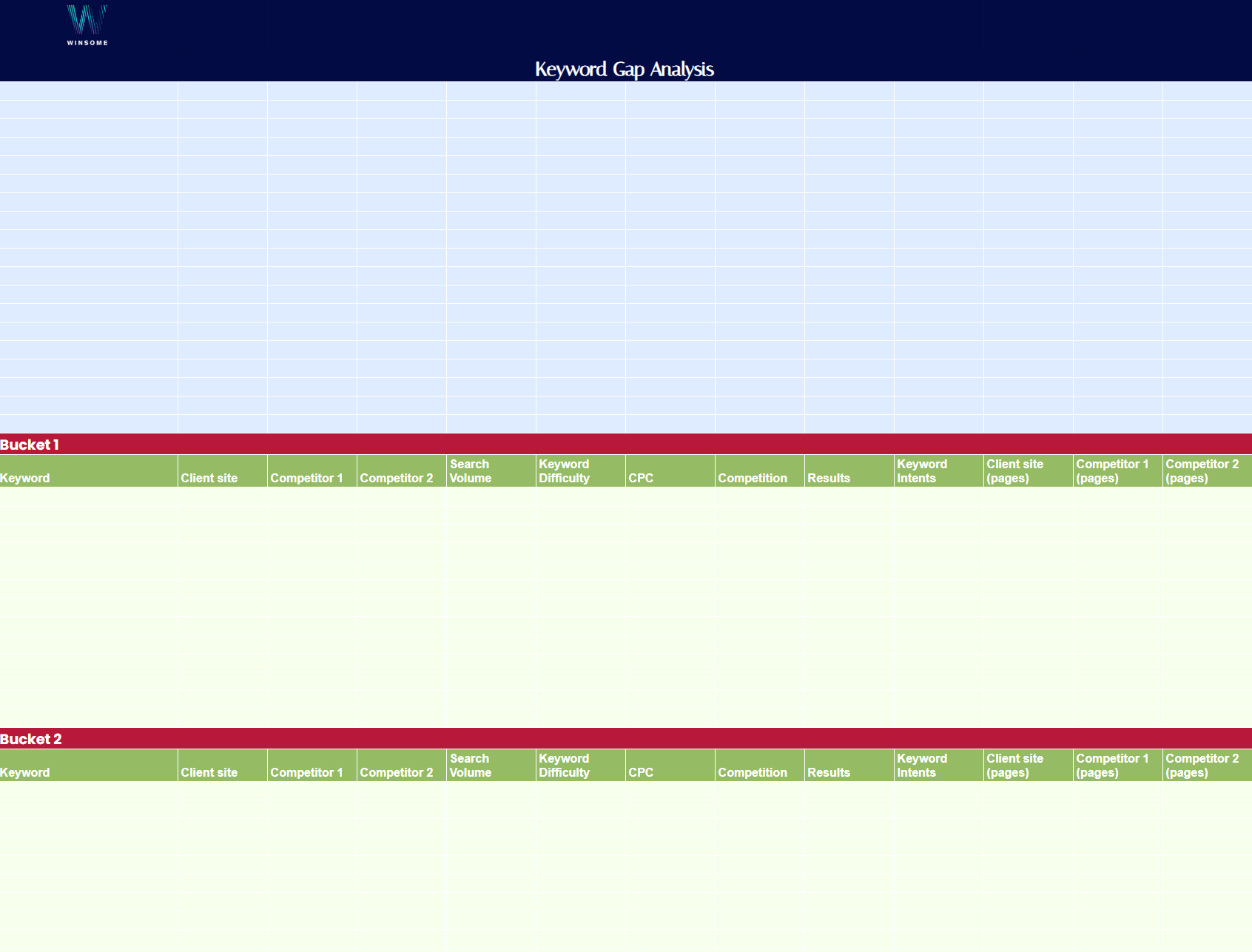
The Keyword Gap Analysis section identifies opportunities where your site can improve its SEO performance by comparing your keyword rankings with competitors.
It organizes data into buckets, showing keywords that competitors rank for but your site does not, alongside metrics like search volume, difficulty, CPC, and competition.
Additionally, it highlights keyword intents and the number of pages targeting these keywords for both your site and competitors.
The core findings provide actionable insights into where to expand your content, refine targeting, and close gaps to improve visibility and drive more organic traffic.
Produce Like a Pro
This section serves as a Content Publishing Calendar to organize and track the lifecycle of content production throughout the year.
It breaks down each month into key components like due dates, titles, content types, review status, publishing dates, targeted keywords, estimated volume, and additional notes.
By filling out this calendar, you can manage deadlines, ensure alignment with SEO goals, and maintain a steady publishing cadence. It’s a comprehensive tool to keep teams aligned and ensure that every piece of content—from January to December—supports strategic objectives and delivers value to your audience.