4 min read

AI Goes Orbital: Researchers Want Satellites to Be Your Next Cloud Server

AI Goes Orbital: Researchers Want Satellites to Be Your Next Cloud Server
9:06

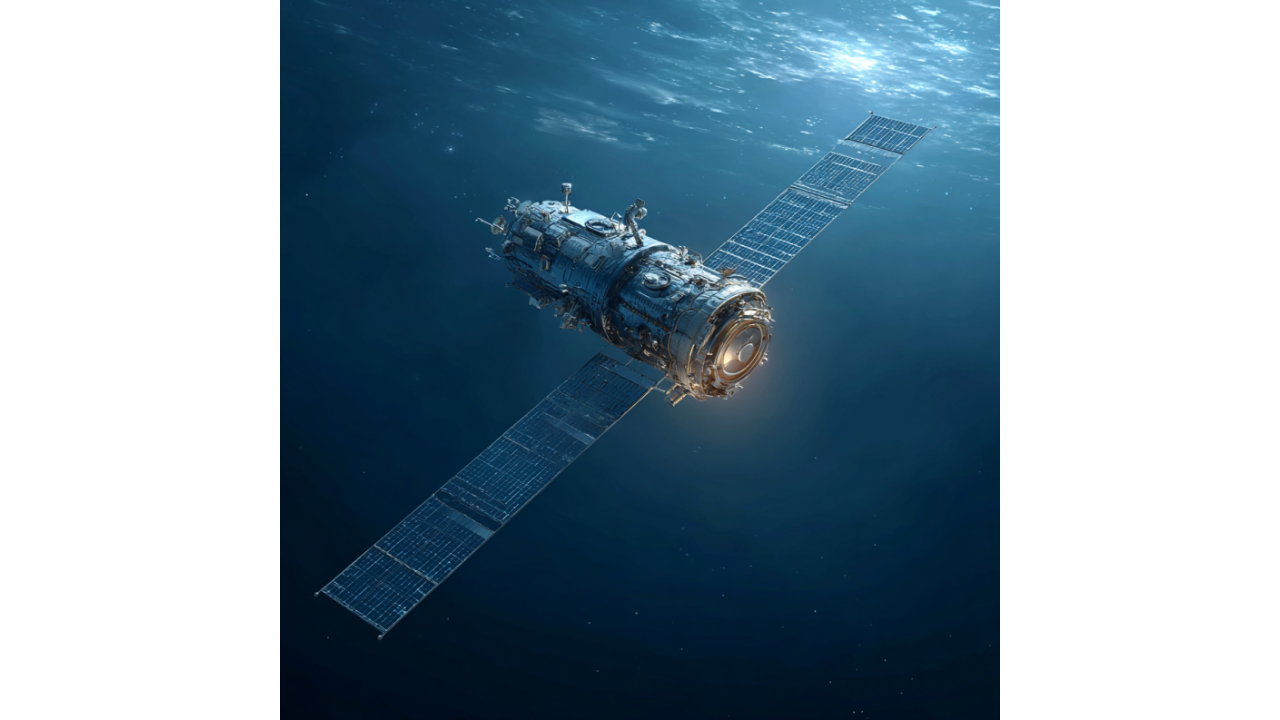
Researchers from the University of Hong Kong and Xidian University just proposed turning satellites into edge computing nodes for 6G networks, enabling AI workloads to flow seamlessly between orbit and ground stations. They call it "space-ground fluid AI"—a framework where neural networks split across satellites and terrestrial infrastructure, dynamically adapting to satellite motion, intermittent connectivity, and limited space-ground link capacity.

The vision: by 2030, when 6G commercialization arrives, satellites won't just transmit data—they'll process AI inference, train federated learning models, and cache neural network parameters while orbiting at 17,000 mph. AI services will flow "like water" across boundaries, delivering "truly global edge intelligence" to remote and underserved regions.

This either represents genuinely innovative distributed computing architecture or the most complicated solution possible to problems terrestrial networks could solve more efficiently. Probably both.

When Earth-Based Infrastructure Isn't Enough (Apparently)

The International Telecommunication Union identified "integrated AI and communication" and "ubiquitous connectivity" as future 6G use cases, signaling networks that do more than transmit data. The researchers argue terrestrial networks alone won't meet these demands as AI workloads grow heavier and more latency-sensitive, especially for vast, remote, underserved regions.

This frames satellite-based edge computing as necessity rather than experimental architecture. But let's interrogate that assumption: are we actually constrained by terrestrial infrastructure limitations, or are we creating complexity because the technology enables it?

Most AI workloads requiring low latency happen in populated areas with existing infrastructure—cities, suburbs, industrial facilities. Remote regions needing connectivity certainly exist, but do they need orbital AI inference, or do they need basic reliable internet first?

The use case slides from "delivering AI services to underserved regions" to "turning satellites into computing servers" without adequately justifying why the latter solves the former better than, say, deploying more terrestrial infrastructure or using satellites purely for connectivity to ground-based AI systems.

New call-to-action

How "Fluid AI" Actually Works

The framework includes three core techniques addressing satellite mobility and intermittent connectivity constraints:

Fluid learning tackles long training times through infrastructure-free federated learning. Instead of expensive inter-satellite links or dense ground stations, the system uses satellite motion itself to mix and spread model parameters across regions. Satellite movement transforms from limitation to advantage, supposedly enabling faster convergence.

Fluid inference optimizes real-time AI by splitting neural networks into cascading sub-models distributed across satellites and ground nodes. Inference tasks adapt dynamically to available computing resources and link quality using early exiting strategies balancing latency and accuracy.

Fluid model downloading addresses efficient AI model delivery by caching only selected parameter blocks on satellites instead of entire models. These blocks migrate through inter-satellite links, improving cache hit rates and reducing download delays. Multicasting reusable parameters lets multiple devices receive AI components simultaneously.

The technical architecture is sophisticated—genuine distributed systems research addressing real constraints like satellite trajectory predictability, intermittent power supplies, and limited bandwidth. Whether these solutions justify the added complexity compared to terrestrial alternatives remains unclear.

The Harsh Reality of Space Computing

Satellites operate under conditions that make edge computing dramatically harder: harsh radiation degrading hardware, limited intermittent power supplies, extreme temperature variations, and no possibility of physical maintenance when things break.

The researchers acknowledge needing radiation-hardened hardware, fault-tolerant computing, and energy-aware task scheduling—each adding cost, weight, and complexity to satellite payloads already constrained by launch economics.

Current satellite constellations like Starlink focus on connectivity because that's the value proposition space uniquely provides. Adding computational workloads means hauling processing hardware to orbit, keeping it powered, protecting it from radiation, replacing it when it fails, and managing heat dissipation in vacuum—all while maintaining the connectivity mission.

The economics only work if orbital computing provides value impossible to achieve terrestrially. For most AI workloads, that's questionable. Latency to satellites in low Earth orbit is 20-40ms one-way—not terrible, but not better than terrestrial edge computing. Bandwidth is limited. Power is scarce. Hardware costs are astronomical (literally).

When Innovation Creates Unnecessary Complexity

There's legitimate distributed systems research here around handling mobility, intermittent connectivity, and dynamic resource allocation. These challenges exist whether computing happens on satellites, vehicles, drones, or any other mobile platform.

But framing this as necessary infrastructure for 6G ubiquitous connectivity conflates genuine technical achievement with questionable architectural decisions. We're adding orbital computing because we can, not because we've exhaustively demonstrated terrestrial approaches are insufficient.

The vision of AI flowing "like water" between space and ground sounds elegant until you consider the engineering reality: radiation-hardened processors, fault-tolerant distributed training, parameter synchronization across intermittent links with varying latency, cache coherence protocols for model blocks migrating between satellites, and energy management for solar-powered orbital computers.

Compare this to: deploying more terrestrial edge nodes, improving ground-based connectivity to remote regions, and using satellites for what they already do well—transmitting data to infrastructure that handles computation.

The Future Research Wishlist

The paper outlines future directions including energy-efficient fluid AI, low-latency fluid AI, and secure fluid AI—each targeting "critical tradeoffs between performance, reliability, and security."

Translation: we've proposed an ambitious architecture with numerous unsolved problems requiring years of additional research before practical deployment becomes viable.

Energy efficiency matters because satellites have limited power. Low latency matters because round-trip time to orbit plus processing delay plus ground transmission creates latency budgets that may exceed terrestrial alternatives. Security matters because AI model parameters and inference data crossing space-ground links create attack surfaces.

These aren't trivial engineering challenges—they're fundamental constraints that may ultimately limit orbital AI to niche applications rather than the ubiquitous infrastructure the researchers envision.

What This Actually Enables (Maybe)

Charitable interpretation: for truly remote regions—Arctic research stations, maritime vessels, isolated communities—where terrestrial infrastructure is genuinely unavailable and satellite connectivity already exists, adding computational capability to satellites could enable AI services impossible otherwise.

For disaster response where ground infrastructure fails, orbital computing provides resilience. For military and aerospace applications where connectivity to terrestrial networks is unavailable or insecure, self-contained satellite AI makes sense.

These are real use cases. Whether they justify the research investment, deployment costs, and operational complexity of space-based AI infrastructure versus improving terrestrial coverage or using satellites purely for connectivity remains debatable.

Skeptical interpretation: we're solving interesting distributed systems problems and framing them as 6G requirements to justify research funding, when the actual bottleneck to AI ubiquity is economic and regulatory, not architectural.

By 2030, we'll know whether satellites become AI edge nodes or remain specialized communication infrastructure that connects users to terrestrial computing. Place your bets accordingly, but remember that complexity often loses to simpler solutions that actually ship.

If you need help evaluating emerging infrastructure claims or building technology strategies around capabilities that exist today rather than speculative 6G architectures, Winsome Marketing grounds ambitious visions in deployable reality.

The Numbers From China's Computing Power Conference

The Numbers From China's Computing Power Conference

China just delivered the most compelling proof-of-concept for AI-driven economic transformation, and the West should be taking notes instead of...

Read More
First Person Controls iPad With Pure Thought

First Person Controls iPad With Pure Thought

Mark Jackson has ALS. He can't move his hands, speak clearly, or use traditional input devices. But he just controlled an iPad with nothing but his...

Read More
Google's Gemma 3 270M

Google's Gemma 3 270M

While tech titans debate whether we've hit an AI wall, Google just quietly shattered the glass ceiling that's kept intelligent computing locked in...

Read More