

 Writing Team
Google's Willow Chip Just Made Quantum Computing Real
 Writing Team : Oct 28, 2025 7:59:59 AM
We've been hearing about quantum computing's "potential" for two decades. Google just turned potential into proof.
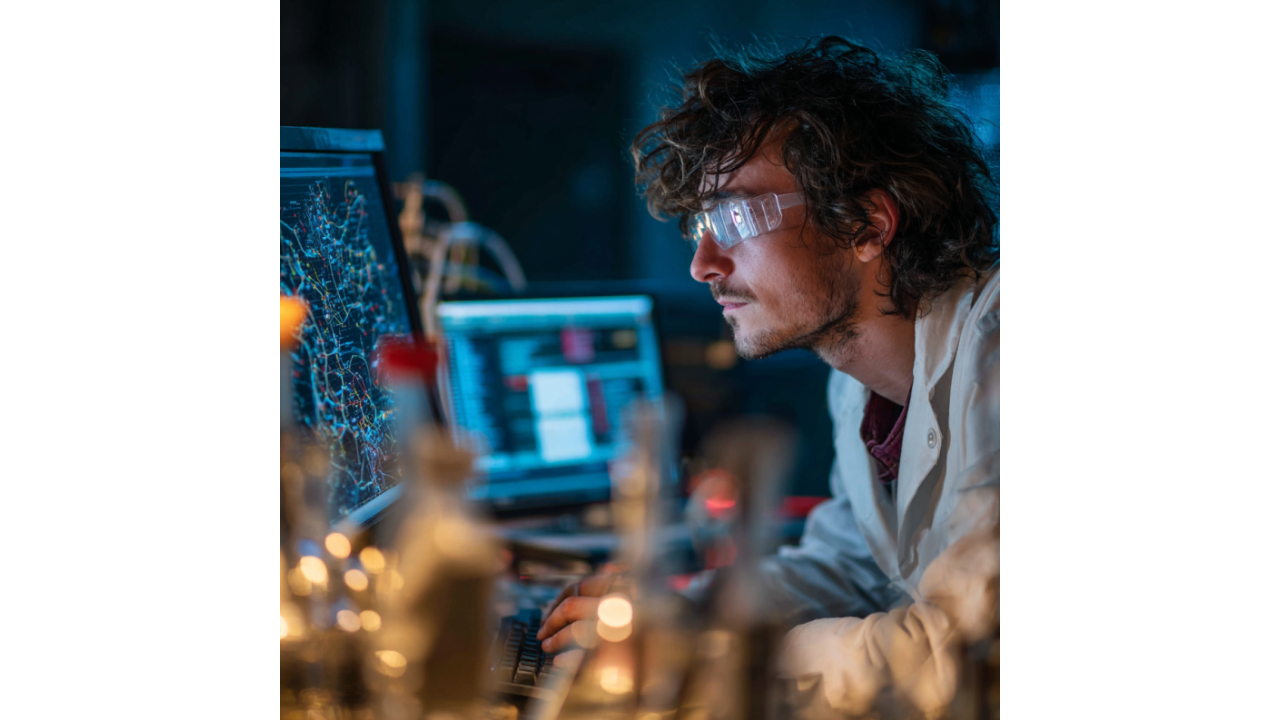
Researchers from Tsinghua University and Peking University just published in Nature Computational Science detailing how deep learning methods are cracking the "accuracy-efficiency dilemma" in electronic structure calculations—the fundamental quantum mechanics that underpins chemistry, materials science, and drug discovery. Neural network quantum states now predict molecular behavior with accuracy matching gold-standard quantum Monte Carlo methods while reducing computational costs by orders of magnitude.
The breakthrough sounds transformative: AI that solves the Schrödinger equation for complex molecules, predicts protein structures, and accelerates materials discovery. Except nobody's talking about the training infrastructure required—JAX and ML Pathways running on TPUv4p, TPUv5p, and TPUv5e hardware at scales most research institutions can't access.
We've solved quantum chemistry's computational bottleneck by creating a different computational bottleneck that only Google-scale infrastructure can handle.
First-principles electronic structure calculations—predicting how electrons behave in atoms and molecules—have been constrained for decades by a fundamental trade-off: you can have accuracy or you can have efficiency, but rarely both. Density functional theory (DFT) runs fast but makes approximations that fail for strongly correlated systems. Quantum Monte Carlo methods are accurate but computationally prohibitive for large molecules.
The deep learning approaches described in this research bridge that gap through two major innovations: deep-learning quantum Monte Carlo (DL-QMC) for accurate correlated electron calculations, and deep-learning density functional theory (DL-DFT) for efficient large-scale simulations.
DL-QMC uses neural networks as variational wave functions—mathematical descriptions of quantum states that can represent complex electron correlations better than traditional analytical approximations. The Conformer architecture combining convolution with self-attention captures both local bonding patterns and long-range quantum entanglement in molecules and solids.
DL-DFT predicts the Hamiltonian matrix—the mathematical operator describing a system's total energy—directly from atomic structures using equivariant graph neural networks. This bypasses expensive iterative calculations while maintaining the physical symmetries required for accurate predictions.
The results are genuinely impressive: neural network quantum states achieving chemical accuracy for molecules previously intractable with conventional methods, materials simulations at scales orders of magnitude larger than traditional DFT, and electronic structure predictions that capture quantum phenomena conventional approaches miss entirely.

Here's what gets buried in methodology sections: these models train on Google's TPU infrastructure using specialized frameworks (JAX, ML Pathways) at computational scales inaccessible to most academic researchers or smaller institutions.
The paper mentions "large speech models" requiring "scale needed for large speech models" and aligning "with Google's broader foundation model training stack." Translation: this requires the same computational infrastructure Google uses for training Gemini and other foundation models—hardware investments measured in hundreds of millions of dollars.
An academic chemistry lab with standard GPU clusters can't replicate these training runs. Even well-funded research universities lack the specialized tensor processing hardware and distributed training frameworks required. The democratization narrative around "open weights" models obscures that training these systems from scratch remains exclusive to organizations with hyperscaler infrastructure.
Yes, pre-trained models get released for inference and fine-tuning. But the fundamental research—developing new architectures, exploring different training strategies, validating approaches on novel chemical systems—remains gated behind computational resources concentrated in a handful of tech companies and national laboratories.
The benchmark results are striking: MedASR-style domain-specific models for quantum chemistry achieving word error rates—sorry, wrong domain—achieving energy predictions within chemical accuracy (1 kcal/mol) for systems where conventional methods fail or require weeks of supercomputer time.
But benchmarks measure performance on curated test sets. Real chemical discovery involves exploring unknown systems where you don't know in advance whether the model's learned representations transfer correctly. The paper acknowledges this: models trained primarily on organic molecules show degraded performance on transition metal complexes or exotic materials unless specifically fine-tuned.
That fine-tuning requires either: (a) expensive quantum chemistry calculations on new systems to generate training data, creating a bootstrapping problem, or (b) access to the original training infrastructure to retrain on expanded datasets.
The efficiency gains are real for systems within the model's training distribution. The "solving quantum chemistry" framing elides that we've replaced one computational bottleneck (expensive calculations) with another (expensive training and domain adaptation).
Multiple papers cited in this review tackle "transferable" neural network wave functions—models that work across different molecules and materials without complete retraining. This is the actual hard problem: building representations that capture fundamental quantum mechanical principles rather than memorizing patterns in training data.
Some progress exists: equivariant architectures that respect physical symmetries, attention mechanisms that capture long-range correlations, and training strategies that improve out-of-distribution generalization. But these remain active research challenges, not solved problems.
A model trained on small organic molecules doesn't automatically understand transition metal catalysis, strongly correlated materials, or excited state dynamics unless specifically trained on relevant data. Each new chemical domain requires validation, benchmarking, and often architectural modifications—work that again requires substantial computational resources.
For research groups with access to pre-trained models and moderate computational resources, these methods genuinely accelerate specific workflows: screening candidate drug molecules, predicting material properties for known chemical spaces, and refining structures from experimental data.
They don't replace quantum chemistry entirely—they augment it for specific use cases where training data exists and predictions fall within learned distributions. The vision of "AI replacing first-principles calculations" remains aspirational, limited by training costs, transferability challenges, and the fundamental problem that validating AI predictions still requires running the expensive quantum calculations you hoped to avoid.
The breakthrough is real. The accessibility is overstated. The infrastructure requirements are undersold. And the computational divide between hyperscalers and academic researchers widens as AI methods require training scales that concentrate capability in fewer hands.
We're solving quantum chemistry's computational problems by creating new computational hierarchies where only institutions with massive infrastructure investments can develop foundational models, while everyone else uses pre-trained systems for applications within those models' validated domains.
Progress, certainly. Democratization? Less clear.
If you need help evaluating scientific AI tools beyond benchmark claims or understanding computational requirements for research applications, Winsome Marketing helps organizations separate capability from accessibility.
-3.png)
Writing Team : Oct 28, 2025 7:59:59 AM
We've been hearing about quantum computing's "potential" for two decades. Google just turned potential into proof.
-3.png)
Writing Team : Apr 17, 2026 12:00:00 AM
NVIDIA just released Ising — the world's first open AI model family built specifically for quantum computing infrastructure. The models target two...

Writing Team : Nov 6, 2025 8:00:01 AM
The co-inventor of the Internet just published a roadmap for where connectivity goes next, and it's not incremental—it's exponential. In a new...