5 min read

Gen Z is Skipping Google: What the 35% Search Shift Means

Gen Z is Skipping Google: What the 35% Search Shift Means
10:04

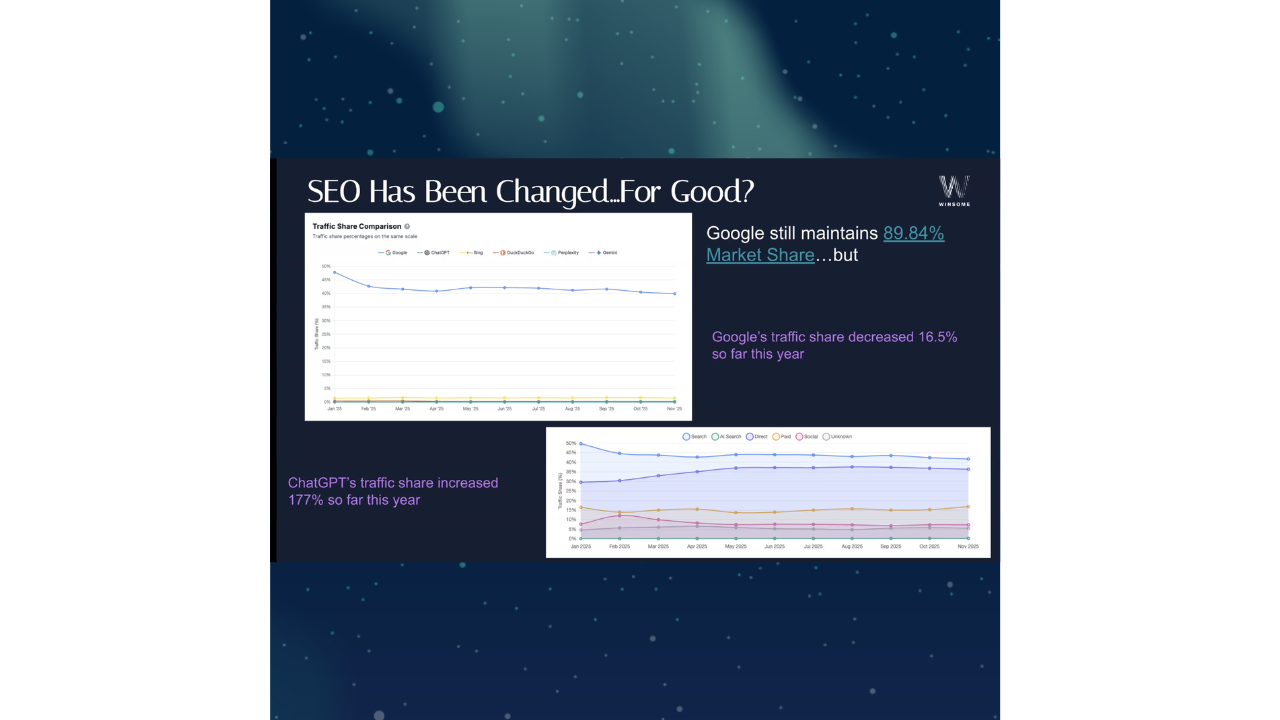
At the start of the year, Google was dominant and AI was supplemental. That's no longer true—at least not for everyone.

Gen Z is leading a massive shift in search behavior that most brands haven't caught up with yet. Thirty-five percent now use AI chatbots for search queries instead of Google, and 40% of them start from TikTok and Instagram.

That's not a small trend. That's a fundamental change in how an entire generation discovers information, researches products, and makes decisions.

The Generational Search Divide

Gen X and Boomers still Google first—70% of them. AI usage is growing for specific tasks in older demographics, but Google remains their default. They've got decades of muscle memory around "just Google it." That behavior is deeply ingrained.

But for people 30 and under, search doesn't automatically mean Google anymore. One in five adults use AI tools regularly, and that frequency is concentrated heavily in younger users.

This isn't experimental behavior. This isn't early adopters trying something new. This is habitual. This is their default.

When Gen Z has a question, they're as likely to ask ChatGPT or search TikTok as they are to open Google. And that changes everything about how brands need to think about discoverability.

Why Gen Z Abandoned Google

It's not that Google is bad. It's that Gen Z learned to use the internet in a fundamentally different context than older generations.

Millennials and Gen X grew up when Google was the answer to "how do I find information on the internet?" Google organized the web. It made information accessible. It was revolutionary, and that shaped how those generations think about search.

Gen Z grew up with social platforms as their primary internet experience. They learned to find information through TikTok's algorithm, through Instagram explore pages, through YouTube recommendations. They learned that the best answers often come from real people sharing their experiences, not from websites optimized for search rankings.

So when AI chatbots emerged that could synthesize information and give direct answers—almost like asking a knowledgeable friend—Gen Z adopted them immediately. Because that's closer to how they already thought about finding information. It's conversational. It's direct. It doesn't require sifting through ten blue links and evaluating which sources are credible.

And when they want product recommendations, visual inspiration, or to see how something actually works in real life, they go to TikTok or Instagram first. Because that's where the format matches what they're looking for.

What This Means for Discovery

Discovery is no longer just happening on your website. Search is fragmenting across platforms. People aren't researching the same way. Discovery is happening across Google, AI tools, TikTok, Reddit, and more.

Each generation has different default platforms they go to, so when we're thinking about marketing, we have to really think about who the customer base and audiences are.

If you're marketing to Gen Z, being optimized for Google isn't enough. You need to be discoverable where they actually search—which means AI chatbots, TikTok, Instagram, and social platforms where they spend time.

If you're marketing to older demographics, Google still matters enormously. But even there, AI usage is growing for specific tasks. So you need presence across multiple search modalities.

And if you're marketing to a mixed demographic—which most B2B companies are—you need to be everywhere. You can't pick one platform and ignore the others. The fragmentation is real, and it's only accelerating.

New call-to-action

The Platform-Specific Challenge

Here's what makes this complicated: each platform works differently. What makes content discoverable on Google doesn't make it discoverable on TikTok. What works in ChatGPT doesn't work on Instagram.

For AI chatbots, you need credible content with consistent messaging across authoritative sources. AI pulls from public content, structured data, citations, and high-authority signals. If you don't publish enough credible content, you'll fall out of the AI ecosystem entirely.

For TikTok and Instagram, you need visual content that the algorithm surfaces. You need to understand how their recommendation systems work. You need content that feels native to the platform, not like repurposed marketing materials.

For Google, you still need traditional SEO—keywords, technical optimization, quality content, backlinks. That hasn't gone away. It's just not sufficient anymore.

This means you can't have a single content strategy. You need platform-specific approaches that all ladder up to consistent brand messaging but execute differently based on where your audience is actually searching.

The Age-Specific Targeting Imperative

When we're thinking about marketing, we really have to think about who the customer base and audiences are. Because the platform mix is completely different by generation.

If your target customer is 25, you need strong TikTok presence and AI discoverability. If they're 55, you need Google optimization and maybe LinkedIn. If they're 35, you probably need both.

This isn't just about where you publish content. It's about how you think about the customer journey. A Gen Z buyer might discover your brand on TikTok, research you in ChatGPT, check reviews on Reddit, and then finally visit your website. That's four different platforms before they ever hit your owned properties.

A Boomer buyer might Google your category, read your website, call your sales team, and make a decision. That's one platform before human interaction.

You can't design the same experience for both. You can't measure them the same way. You can't even think about "the funnel" the same way.

The Consistency Requirement

For AI to read your site and your brand, you almost need to have consistent messaging across all platforms. That would be your leadership team, the website, all your social platforms. AI is grabbing information from all of that, so consistent messaging gives you a better shot of being understood correctly.

This matters more now because AI doesn't just look at your website. It looks at everything. Your social profiles. Your press mentions. Your team's LinkedIn posts. Your customer reviews. Your Reddit mentions.

If your messaging is inconsistent across those sources, AI gets confused about what you actually do and who you serve. And when AI is confused, it either doesn't cite you or it cites you incorrectly.

That means brand consistency isn't just about looking professional anymore. It's about being discoverable in AI search results.

The Immediacy Problem

Gen Z expects immediate, direct answers. They don't want to click through to a website and scroll to find what they're looking for. They want the answer right there in the interface they're already using.

This is why AI chatbots work so well for them. Ask a question, get an answer. No clicking. No scrolling. No evaluating sources. Just the information they need.

For brands, this creates a challenge: how do you provide value and build relationships when people are getting answers without ever visiting your website?

The answer is that you have to be the source the AI cites. You have to be authoritative enough, credible enough, and consistent enough that when someone asks a question in your category, the AI pulls from your content and mentions your brand.

That's very different from traditional SEO where the goal was to get someone to click through to your site. Now the goal might be to get mentioned in an AI answer, even if they never visit your site.

What To Do About This

First, acknowledge that the generational divide is real and it's not going away. Younger generations aren't going to suddenly start using Google the way older generations do. The fragmentation is permanent.

Second, map your actual customer demographics to platforms. Don't guess. Look at your data and understand where your customers actually are. Then prioritize accordingly.

Third, build platform-specific strategies that share consistent messaging but execute differently. What you post on TikTok should reinforce the same brand message as your website, but it shouldn't look or feel the same.

Fourth, invest in AI discoverability. That means authoritative content, consistent messaging, structured data, citations from credible sources. If AI tools can't find and understand your content, Gen Z can't find you.

Fifth, test your visibility. Search for your brand in ChatGPT. Search for your category. See what comes up. If you're not there, you're invisible to 35% of Gen Z.

The Strategic Implication

The 35% search shift isn't just a stat. It's a fundamental change in how brands get discovered. And it's going to keep growing.

AI usage is increasing. Younger users are aging into higher purchasing power. The behaviors they're forming now will be the default behaviors for the next several decades of consumers.

Brands that adapt—that build presence across AI platforms, social discovery, and traditional search—will reach these audiences. Brands that don't will increasingly struggle to be discovered at all.

Because when 35% of a generation doesn't use your primary discoverability channel, you either meet them where they are or you lose them entirely.

Build Discoverability Across Every Platform Your Customers Actually Use

Search fragmented by generation in 2025. At Winsome Marketing, we help brands build strategic presence across Google, AI chatbots, TikTok, Instagram, and every platform where your specific customers actually search—with platform-specific execution and consistent brand messaging.

Ready to be discoverable where your customers actually look? Let's build a cross-platform strategy based on who you're actually trying to reach.

What is Generative SEO? Navigating the Future of AI-Driven Search

What is Generative SEO? Navigating the Future of AI-Driven Search

A new frontier has emerged that's capturing the attention of marketers, content creators, and SEO professionals alike. Generative Search Engine...

Read More
Google's 2025 Year in Search: Hot Honey and Onyx Storm FTW

Google's 2025 Year in Search: Hot Honey and Onyx Storm FTW

Google released its 2025 Year in Search data, and the top trending search term globally wasn't a celebrity death, political crisis, or cultural...

Read More
AI Mode Decoded: The SEO's Guide

5 min read

AI Mode Decoded: The SEO's Guide

Mike King's exhaustive analysis of Google's AI Mode reads like a technical manual for the future of search—and that's exactly what we needed. While...

Read More