Content Velocity vs. Content Volume: Finding Your Publishing Sweet Spot
Most content strategies suffer from one of two problems: publishing too little to gain momentum, or publishing so much that quality collapses under...
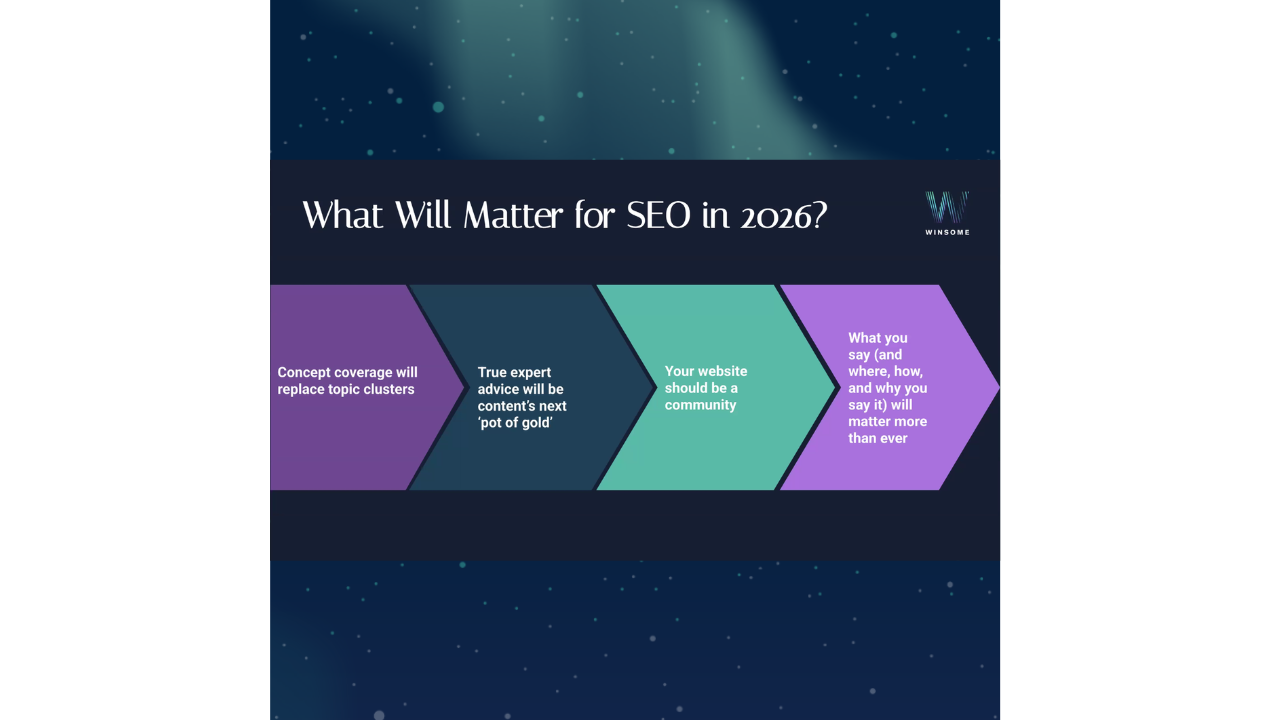
I've been saying for a long time that the traditional topic cluster probably isn't going to work as well anymore. And I know some people disagree with me on this—I'm happy to hear that disagreement—but I think in general, concept coverage is going to be more important than traditional topic cluster coverage.
Here's why: the volume we need to play in this arena of search has fundamentally changed.
Look, I don't see a huge distinction from topic clusters to concept coverage, other than it's a more broad application of the same principle. You want to demonstrate your website has a bank of content about whatever's important to your business. Concept coverage is just the next step of that.
But here's the thing: you're not going to be competitive with a topic cluster, with a pillar and six or eight articles. You need to be much more broader than that.
The traditional model was contained. Manageable. A nice little kingdom of interconnected content all pointing back to your pillar page. It made sense when the competition was thinner and search engines were less sophisticated.
Now? That's not enough.
Concept coverage means you're not just creating a structured hub-and-spoke model. You're building comprehensive authority across an entire concept—with all its nuances, applications, contexts, and intersections.
Think about it this way: a topic cluster says "here's our definitive guide on X, and here are eight supporting articles." Concept coverage says "we've explored every meaningful angle of X, every question someone might ask, every adjacent topic that touches it, every practical application."
It's the difference between having a conversation starter and actually being conversant.
The amount of content required to compete has exploded. And I'm not talking about churning out garbage—I'm talking about meaningful, expert-driven content at scale.
Search engines are getting better at understanding semantic relationships and conceptual depth. They can tell when you've just scratched the surface versus when you've actually covered a concept thoroughly. LLMs are ingesting massive amounts of content to understand topics. Forums that rank—like Reddit threads that pop up in the top ten—are often two to three years old. They're not yesterday's conversations.
What we say could come back to us two or three years from now. So we have to be intentional about what we put out there for ourselves and our clients. Not that this should put us into paralysis, but we need to be thoughtful about the narrative we're crafting and everything fitting into what that narrative is.
There's been all this change in search, but the tracking and measurement tools haven't really kept pace with it. It's like the Wild West. There's a lack of reporting nuance these days. A lot is just lumped into direct traffic, and you don't really have a good idea of what you're doing that's being most effective in your marketing.
That's why concept coverage matters. When you can't track every individual piece's performance with perfect clarity, you need comprehensive presence. You need to show up for every variation of the question, every angle of the topic.
This isn't about abandoning structure entirely. It's about expanding our ambition.
Instead of asking "what's our pillar page and what are the eight supporting articles," we need to ask "what does comprehensive coverage of this concept look like?" What are all the questions someone might ask? What are the related concepts they'd need to understand? What are the practical applications they'd want to explore?
And then we build that. Not all at once necessarily, but systematically, with intention.
The beautiful thing is we can still do this at scale. We've proven we can create quality content efficiently. The model just needs to be broader, more ambitious, more comprehensive.
Quality is going to win the war. It doesn't necessarily matter how we get to that output, but if the output is quality—in terms of information architecture, technical soundness, what we say, how we show up, where we show up—we are going to win.
We've seen that. We can prove we can still do that at scale.
Concept coverage is just the natural evolution of what we've always known: depth matters, authority matters, comprehensiveness matters. We're just finally matching our content volume to the reality of modern search competition.
Traditional topic clusters were a good start. Concept coverage is where search wins happen now. At Winsome Marketing, we build comprehensive content strategies that establish real authority—not just surface-level coverage.
Let's build something that actually competes. Talk to our team about concept-driven content strategy.
Most content strategies suffer from one of two problems: publishing too little to gain momentum, or publishing so much that quality collapses under...
You've read the SEO guides. You've identified your target keywords. You've carefully woven those keywords into your content at the recommended...