The Three Real Reasons People Search (And Why HubSpot's Framework Is Outdated)
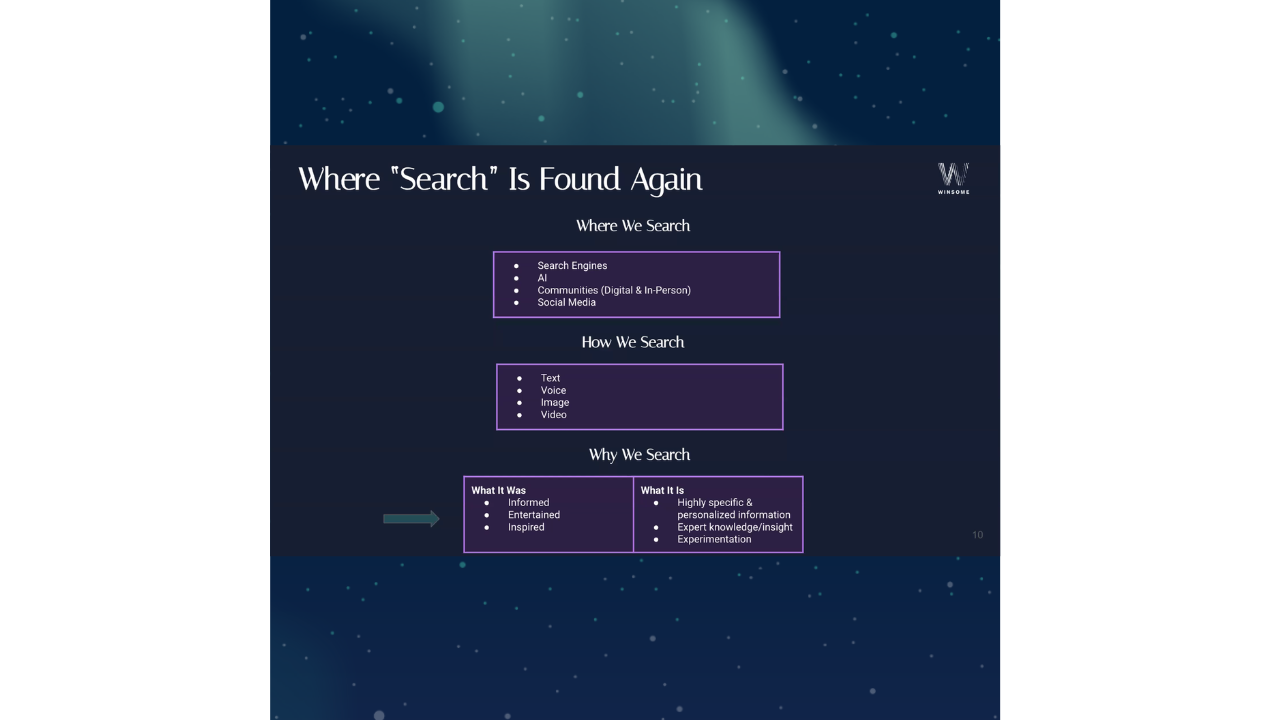
I remember the foundational HubSpot framework from fifteen years ago, when they said the reasons why people search something on the internet. That...
5 min read
Writing Team
:
Jan 12, 2026 8:00:03 AM
SEO textbooks teach that search intent falls into three neat categories: informational (learning), transactional (buying), and navigational (finding). This framework is twenty years old, based on pre-smartphone search behavior, and fundamentally misunderstands how humans actually seek information.
The real taxonomy of search intent is far more complex—and far more useful once you understand it.
"Best running shoes" appears transactional—someone wants to buy shoes. Except most people searching this aren't ready to purchase. They're beginning research, building knowledge, establishing criteria. The search looks transactional but serves informational intent with eventual transactional goals.
The three-category model forces complex behavior into inadequate buckets. Why HubSpot's framework is outdated isn't just about HubSpot—it's about the entire industry using classification systems that oversimplify human information-seeking behavior.
Real search intent exists on multiple dimensions simultaneously. Someone searching "migraine causes" wants information (explicit intent) but also validation that their symptoms are normal (implicit intent) and possibly reassurance they don't have brain cancer (emotional intent). One search, multiple intents.
Before people know enough to ask informational questions, they investigate—broad, exploratory searches trying to understand what they don't know enough about to ask specifically. "Why does my head hurt differently lately" versus "tension headache versus migraine symptoms."
Investigational intent precedes informational intent. People need orientation before they can seek information. They're mapping the problem space before identifying specific knowledge gaps. Content optimized for informational intent fails investigational searchers because it assumes baseline knowledge they haven't acquired yet.
This matters for interactive content that serves firms—calculators and diagnostic tools serve investigational intent better than articles because they help users understand what questions to ask rather than answering questions they already formed.
People search to confirm existing beliefs, not just acquire new information. "Climate change not real" and "climate change evidence" serve identical validational intent—confirming preexisting positions—despite appearing to seek opposite information.
Validational searches look informational but serve different psychological needs. The searcher already has answers; they're seeking authority backing for positions they've adopted. Content that challenges their view gets rejected regardless of quality.
Marketing to skeptics requires recognizing validational intent. When people search for information confirming that wellness products are pseudoscience, providing more evidence doesn't change minds—they're not seeking truth, they're seeking validation.
"HubSpot versus Salesforce" isn't informational—the searcher already knows both products exist. It's not transactional either—they're not ready to buy. It's comparison intent: evaluating multiple options to narrow decision criteria.
Traditional taxonomy calls this informational, but comparison searches require different content than learning searches. Comparison intent wants side-by-side evaluation, explicit difference highlighting, use-case-specific recommendations. Generic "what is CRM" content fails comparison searchers completely.
Self-service purchasing flows must account for comparison intent—people arriving with competitor context, evaluating based on relative rather than absolute merits, needing specific differentiation not general education.
"Laptop won't turn on" is classified informational. But the intent isn't learning for learning's sake—it's urgent problem resolution. Troubleshooting intent has different content requirements than curiosity-driven informational intent: prioritize solutions over explanations, provide quick diagnostics before comprehensive understanding, acknowledge emotional state (frustration) that pure information doesn't address.
Most how-to content is actually troubleshooting intent misclassified as informational. The searcher isn't seeking knowledge—they're seeking problem resolution. Content structured for information transfer fails troubleshooting searchers who need actionable steps immediately.
"[Product name] reviews" appears informational—gathering data to inform decisions. But the deeper intent is social proof: seeing whether people similar to the searcher succeeded with this product. It's identity verification disguised as information gathering.
Social proof intent explains why review content structured as pure information (features, specs, ratings) underperforms compared to narrative reviews showing specific people in specific contexts using products. Searchers aren't evaluating products—they're evaluating whether they'd fit in the community of users.
Community contribution versus promotional content directly addresses this—authentic community content serves social proof intent better than marketing content because it provides genuine identity mirrors rather than aspirational positioning.
Not all searches have specific intent. "Ideas for [vague category]" represents exploration intent—wandering without defined objectives, open to discovery, receptive to tangents. Pinterest and TikTok capture this better than Google because their interfaces support goalless exploration.
Gen Z skipping Google partly reflects misalignment between Google's results-oriented search and exploration intent that wants discovery experiences. Instagram search better serves "show me interesting things in this space" than Google's "answer this specific question" approach.
Content for exploration intent needs hooks and tangents—getting attention from people who don't know what they want, then leading them through discovery rather than answering predetermined questions.
People search after buying, seeking confirmation they made correct decisions. This appears informational but serves entirely different psychological needs—reducing cognitive dissonance rather than informing future action.
"Why [product I just bought] is good" searches want validation, not information. Content serving decision validation intent acknowledges the purchase was smart, provides additional use cases the buyer hadn't considered, builds confidence rather than educates.
Most brands ignore post-purchase search intent entirely, focusing on pre-purchase. But validation content serves retention and advocacy—satisfied buyers who feel smart about their decision become promoters.
These seem identical but serve different cognitive modes. Research intent is instrumental—gathering information to support external goals (work project, purchase decision, life change). Learning intent is intrinsic—seeking knowledge for its own sake, curiosity-driven, no immediate application.
The same topic serves both intents but requires different content approaches. Research intent wants comprehensive, citable, decision-supporting information. Learning intent wants engaging, memorable, conceptual understanding. SEO content strategy optimized for research intent alienates learning-intent audiences with its density and instrumental focus.
"Coffee shop" has dramatically different intent at 8am (transactional: I need coffee now) versus 10pm (investigational: what coffee options exist in this area for future reference). Location and time context alter intent in ways the query alone doesn't reveal.
Local intent splits into immediate need (transactional with urgency), future planning (informational with future transactional), and exploratory (show me what exists here). The same query serves different intents based on context the search engine must infer.
Some searches carry implicit urgency that changes how content must serve them. "Chest pain symptoms" at 3am has different intent than the same search during a doctor's appointment. Emergency intent demands immediate, clear, action-oriented content even when the query appears purely informational.
Crisis management understanding applies to search—recognizing when urgency modifies intent and adapting content accordingly. Generic "here's comprehensive information" fails emergency intent that needs "do this now, understand why later."
Real search behavior involves sequences. Someone starts with investigational intent, moves to informational, then comparison, then transactional, then validation. Each search in the sequence serves different intent, requires different content, builds on previous searches.
Most SEO strategy optimizes individual queries without considering sequence patterns. Understanding that "what is CRM" (investigational) typically precedes "CRM for small business" (informational) which precedes "HubSpot versus Salesforce" (comparison) allows content architecture that supports natural intent progression.
The three-category model persists because it's teachable and simple. But simple frameworks that don't match reality create strategies that don't work. Understanding search intent's actual complexity—investigational, validational, comparison, troubleshooting, social proof, exploration, decision validation, research, learning, local, emergency, and their combinations—enables content that serves what people actually need.
Search intent isn't three categories. It's a multi-dimensional space where queries occupy different positions based on context, prior knowledge, urgency, and psychological state. Mapping this space accurately is how you create content that serves real searches instead of textbook examples.
Want to build content strategies based on how search intent actually works instead of how SEO textbooks say it works? We map complex search behavior to create content that serves real user needs. Let's talk about understanding the searches your audience actually performs.
I remember the foundational HubSpot framework from fifteen years ago, when they said the reasons why people search something on the internet. That...
A new frontier has emerged that's capturing the attention of marketers, content creators, and SEO professionals alike. Generative Search Engine...
We've been talking about personalization and marketing for, like, twelve thousand million trillion years. We know how important it is, and how great...